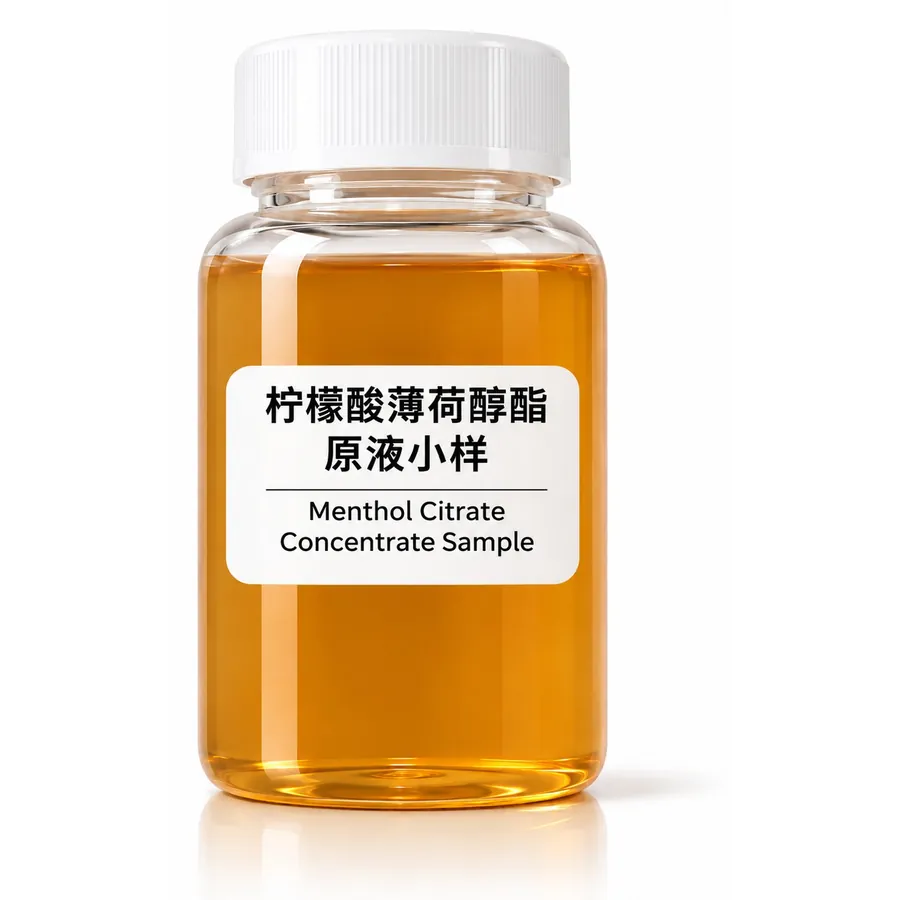
Pale yellow oil
Emulsions, balms, oil gels and patch matrices. Added to the oil phase before emulsification. pH 3–4 at 2% dilution.
A menthol citrate ester manufactured in our own facility: volatility down more than 90%, no alcohol, water-soluble without a solubiliser. Supplied for formulation evaluation and commercial production in the United States and the European Union.
A cooling ingredient is decided by three things: how fast the sensation arrives, how long it holds, and whether it survives a high-surfactant base without fighting the fragrance. Our work is centred on how the molecule behaves inside the finished product, not on a number on a datasheet.
Because we manufacture the material ourselves, formulation questions reach the people who run the batch. That shortens the loop between a sensory problem in your lab and a change in ours.
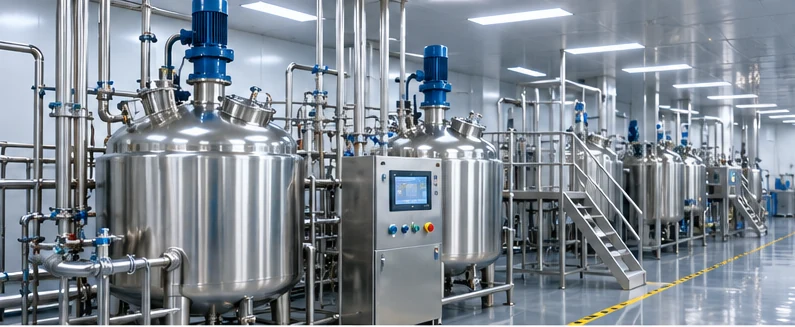
Image note: production visuals are illustrative renderings, not photographs of CITRAVION premises. Verified site photography is available to qualified buyers on request.
What a formulator means by the phrase is a short list of measured properties. Four of them belong to the material, and they are the four we control by specification.
| Property | What it means | Why it matters in this brief |
|---|---|---|
| Free menthol | Controlled by specification, not left to the batch | Free menthol is the sting. The ester is what carries the cooling, so the two have to be separated on paper |
| Volatility | More than 90% lower than free menthol | Less vapour reaching the eyes and airway in a warm bathroom or a closed car |
| Alcohol | None in the cooling system | Nothing to sting on skin that is already broken, chafed or irritated |
| Solubility | 2–3.2 g/L in water | Clear washes and mists without a solubiliser or a heavy surfactant load |
| pH window | 3–4 free acid; 8–10 sodium salt | Match the pH the rest of the formula already needs instead of moving it |
| Odour | Low, without a masking fragrance | Fragrance-free is easier to claim and easier to certify than fragrance-masked |
An oil phase, a clear aqueous concentrate, or a dry powder — the choice usually decides how much formulating work the ingredient adds.
Emulsions, balms, oil gels and patch matrices. Added to the oil phase before emulsification. pH 3–4 at 2% dilution.
Clear sprays, toners and shampoos where a solubiliser would cloud the product. pH 8–9 neat.
Powder systems, concentrates and dry blends. Pre-dissolve in water or a glycol. pH 9–10 at 1% dilution.
These are the reference formats in our sample library. They are starting points for a brief, not a product catalogue.
Clear pump sprays and floral waters where cooling is the primary sensory signal and the formula has to stay light.
Hydrogel and non-woven formats where the cooling system has to sit in a carrier and release predictably over wear time.
Shampoos, body washes and masks where surfactants, viscosity and fragrance all compete with the cooling note.
| Commercial name | Menthol Citrate (CITRAVION product name) |
|---|---|
| Production | Own facility, Zhejiang, China |
| Capacity | Up to 1 metric ton per month, subject to scheduling |
| Sample | Complimentary for qualified business buyers; buyer pays shipping and import charges |
| Commercial quantities | Quoted per grade, packaging and destination |
| Documentation | Shared with qualified buyers where records exist for the grade |
| Regulatory status | Confirmed in writing per grade and destination, with the supporting records. The evidence map shows which documents travel with the material and which are built on your formula |
Listing and naming status for a specific market is confirmed in writing with each enquiry, together with every record we hold for the grade. Your regulatory team gets the file it needs to make the call.
Menthol Citrate is the commercial name CITRAVION uses for a menthol citrate ester — a mono-ester made from L-menthol and citric acid, not a blend or a physical mixture. Formal INCI naming, CAS registration and market-specific regulatory status are confirmed per grade and destination rather than assumed from the commercial name.
Yes. Qualified business buyers can request an evaluation sample at no material cost. The buyer covers shipping and any import duties, taxes or clearance charges. Sample size and frequency are agreed per request.
Our own facility currently supports up to one metric ton per month. Availability, grade, batch scheduling and lead times are confirmed at quotation, because capacity is shared across running orders.
Documentation such as specification sheets, safety data, batch records and composition statements is shared with qualified buyers for the specific grade. Composition, alcohol-content and animal-derived-input statements are available for your own certification file.
We develop and manufacture finished cooling personal care products through qualified partner factories. That route is covered on the OEM/ODM page and starts with one of our reference samples.
Compliance is assessed per formula, intended use, claims and destination, by you and your regulatory advisers. What we do is commission the specific tests a submission needs, at the laboratory's price, and hand you the reports for your file.
Tell us the format you are working on and we will send the closest reference material.